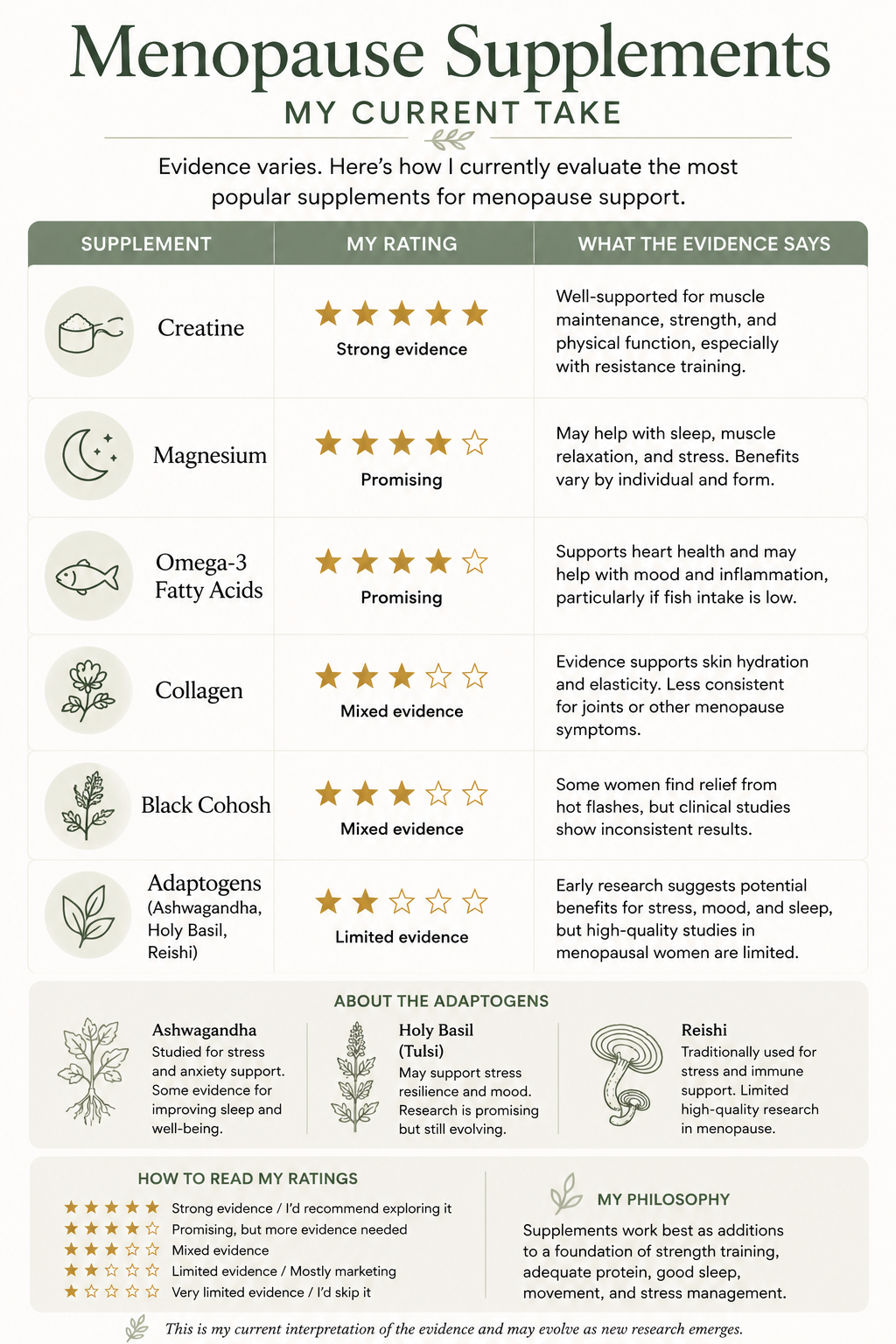
Menopause Supplements: What the Evidence Says

Interest in menopause supplements has grown rapidly in recent years. Products marketed for sleep, hot flashes, mood, brain fog, joint health, and healthy aging are now widely available—but the evidence supporting them varies considerably.
While some supplements show promise for specific symptoms, others are backed primarily by limited research or marketing claims. Here’s a run-down of some of the top contenders:
Magnesium: Evidence = Moderate
Magnesium is commonly used to support sleep and muscle relaxation.
Current evidence suggests it may help some people, particularly those with low magnesium intake, but results have been mixed in clinical studies.
Creatine: Evidence = Strong
Creatine is one of the most extensively studied supplements available.
Although traditionally associated with athletes, research increasingly suggests it may help support muscle maintenance and physical function during healthy aging, particularly when combined with resistance exercise.
Omega-3 Fatty Acids: Evidence = Moderate to Strong
Omega-3s support cardiovascular health and may offer modest benefits for mood and inflammation.
Benefits appear greatest for women who consume little fatty fish.
Black Cohosh: Evidence = Limited to Moderate
Black cohosh has been studied primarily for hot flashes.
Results have been inconsistent, with some women reporting improvement while clinical trials have produced mixed findings.
Adaptogens: Evidence = Emerging
Adaptogens, such as Ashwagandha, Holy Basil or Tulsi, Reishi, and many others are increasingly marketed for stress, energy, and hormonal balance.
While some early research is promising, high-quality studies in menopausal women remain limited.

Collagen: Evidence = Moderate for skin, limited for other outcomes
Collagen supplements may improve skin hydration and elasticity in some individuals, but evidence for joint health and other menopause-related symptoms is less consistent.
My Perspective
As someone with a background in public health research, I've learned that wellness products rarely fall into simple categories of "works" or "doesn't work."
Most occupy a middle ground.
Some have encouraging evidence.
Some appear safe but may not be worth the cost.
Many are marketed far beyond what current research supports.
Rather than searching for a single miracle supplement, I think it's more helpful to build a strong foundation with regular physical activity, balanced nutrition, plenty of water, good sleep, and stress management. Supplements may then serve as targeted additions rather than substitutes for healthy habits.