Creatine for Women: Benefits, Side Effects, Dosage, and What the Evidence Says

Creatine is one of the most researched dietary supplements available, yet many women assume it is only useful for athletes and bodybuilders.
The evidence suggests otherwise.
Researchers have increasingly studied creatine for its potential role in healthy aging, muscle maintenance, physical performance, and cognitive function. While not every claim is supported equally, several benefits are backed by substantial research.
What Is Creatine?
Creatine is a naturally occurring compound found primarily in muscle tissue. The body produces some creatine on its own, and smaller amounts are obtained through foods such as meat and fish.
Supplemental creatine increases the amount stored in muscles, helping provide energy during periods of physical activity.
Benefits of Creatine for Women
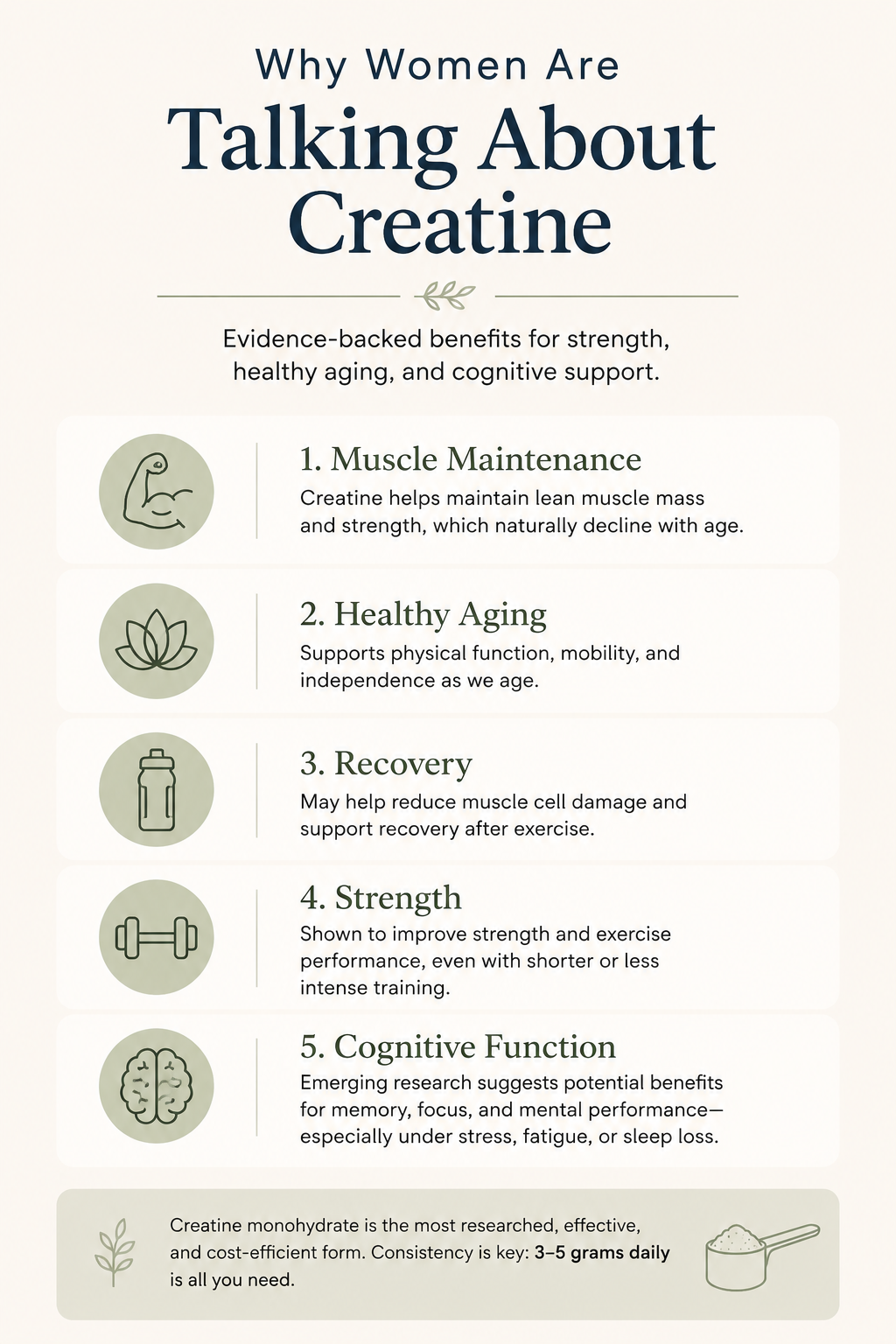
Research suggests creatine may help:
Increase strength and muscle performance
Support maintenance of lean muscle mass
Improve exercise recovery
Support healthy aging
Potentially support certain aspects of cognitive function
Creatine and Healthy Aging
One of the most promising areas of research involves age-related muscle loss.
Beginning in midlife, adults naturally lose muscle mass and strength over time. Resistance training remains the most effective strategy for preserving muscle, but creatine may provide additional benefits when combined with exercise.
Can Creatine Improve Brain Function?
Researchers are investigating creatine's role in cognition, memory, and mental performance.
The evidence remains preliminary, but some studies suggest potential benefits during periods of sleep deprivation, stress, and aging.
How Much Creatine Should Women Take?
Most experts recommend:
3–5 grams of creatine monohydrate daily
A loading phase is optional and generally unnecessary for most people.
Potential Side Effects
Creatine is generally considered safe for healthy adults.
Possible side effects may include:
Temporary water retention
Mild digestive discomfort
Bloating in some individuals
Most side effects can be minimized by using moderate daily doses and staying well hydrated.
Which Form Is Best?
The overwhelming majority of research has been conducted on creatine monohydrate.
Despite marketing claims about newer forms, creatine monohydrate remains the most studied, effective, and cost-efficient option.
The Bottom Line
Creatine is no longer just a sports supplement. Growing evidence suggests it may play a useful role in healthy aging, muscle maintenance, and overall physical function for women.
While it is not a substitute for exercise, sleep, or nutrition, it may be one of the few supplements with enough evidence to justify serious consideration.