Magnesium Benefits: Sleep, Migraines, Muscle Function, and What the Evidence Says

Magnesium is one of the most commonly recommended supplements for sleep, muscle cramps, migraines, stress, and overall wellness. At first glance, that seems almost too good to be true.
So why does magnesium come up so often when discussing health?
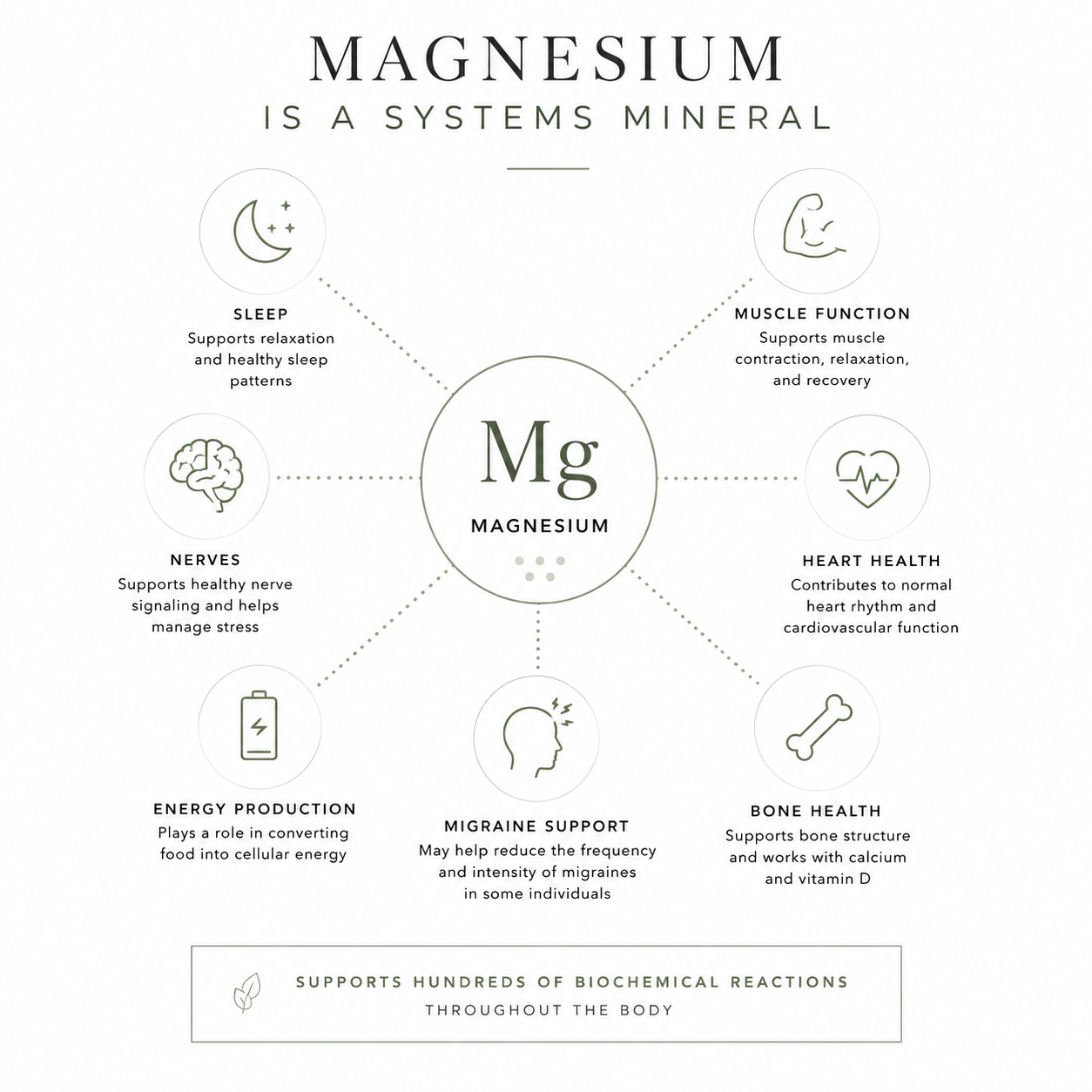
The answer lies in its role as a foundational mineral. Rather than acting on a single organ or symptom, magnesium participates in hundreds of biochemical reactions that support the normal function of multiple body systems.
Why Magnesium Matters
Magnesium contributes to:
Normal muscle function
Healthy nerve signaling
Energy production
Bone health
Heart rhythm
Protein synthesis
Because these systems are interconnected, magnesium deficiency can affect the body in a variety of ways.
Sleep

Magnesium helps regulate several processes involved in sleep, including muscle relaxation and nervous system function.
Current evidence suggests supplementation may improve sleep quality for some people, particularly those with low magnesium levels, although the effects are generally modest rather than dramatic.
Evidence: ⭐⭐⭐⭐☆
Migraines
Magnesium is one of the better-studied supplements for migraine prevention.
Clinical guidelines often include magnesium as an option for reducing migraine frequency in some people, especially when deficiency is suspected.
Evidence: ⭐⭐⭐⭐☆
Muscle Function
Magnesium is essential for normal muscle contraction and relaxation.
While many people take magnesium for muscle cramps, research findings are mixed, and benefits may depend on the underlying cause of the cramping.
Evidence: ⭐⭐⭐☆☆
Which Form Should You Choose?

Different forms of magnesium have different characteristics.
Magnesium glycinate: Often chosen for sleep and because it's generally gentle on the stomach.
Magnesium citrate: Commonly used when constipation is also a concern.
Magnesium malate: Sometimes preferred by people seeking support for muscle function and energy, though evidence is limited.
Magnesium L-threonate: Marketed for cognitive health, but research is still emerging.
My Perspective
While magnesium is interesting because it's associated with so many potential benefits, it also reminds me that health rarely depends on a single pathway. Our bodies are networks of interconnected systems, and the building blocks supporting those systems may influence many different outcomes over time. Magnesium’s role in the body illustrates that it's less about chasing symptoms and more about understanding the underlying conditions that allow the body to function well.
The Bottom Line

Magnesium isn't a cure-all, and it isn't necessary for everyone. But it is an essential mineral that plays a foundational role in many of the body's systems. For people with low magnesium intake or certain health conditions, supplementation may be worth discussing with a healthcare professional.
As with many wellness decisions, the goal isn't simply to solve today's problem—it's to support the systems that make long-term health possible.
NOTE: When I first started reading about magnesium, I found myself asking why so many people are deficient in such an important mineral. The answer isn't that magnesium disappeared. More likely, it's that our diets changed. Foods rich in magnesium include leafy greens, beans, nuts, seeds, and whole grains, and more refined and highly processed foods that contain much less magnesium. Magnesium deficiency, in many cases, isn't really a magnesium problem—it's a reflection of broader dietary patterns.