Why Think About Protein in Midlife?

Protein has traditionally been associated with athletes, bodybuilders, and anyone trying to build muscle.
But somewhere around midlife, the conversation changes.
The question becomes less about how much muscle we can build and more about how much strength, mobility, and physical capacity we can preserve.
Why Does Protein Matter More as We Age?
Muscle mass and strength tend to decline as we age, particularly later in adulthood. Menopause can add another layer of change for women as declining estrogen affects muscle and bone.
But muscle loss isn't simply an aesthetic issue.
Muscle contributes to strength, balance, mobility, glucose metabolism, bone health, and our ability to recover from illness or periods of inactivity.
I increasingly think of muscle as a form of physical reserve—something we build and maintain while we're healthy so it's available when life asks more of our bodies.
Protein provides some of the raw materials needed to maintain that reserve.
How Much Protein Do You Need After 40?
The Recommended Dietary Allowance (RDA) for protein for healthy adults is 0.36 grams per pound of body weight per day. For a 150-pound person, that's about 54 grams of protein per day.
The RDA doesn’t increase at 40. However, some experts to recommend higher intakes for older adults—often around 0.45–0.54 grams per pound of body weight each day, or roughly 68–82 grams for a 150-pound person—to help preserve muscle and physical function.
Needs may be higher still during illness, recovery, or intensive physical activity.
Protein Alone Isn't the Answer
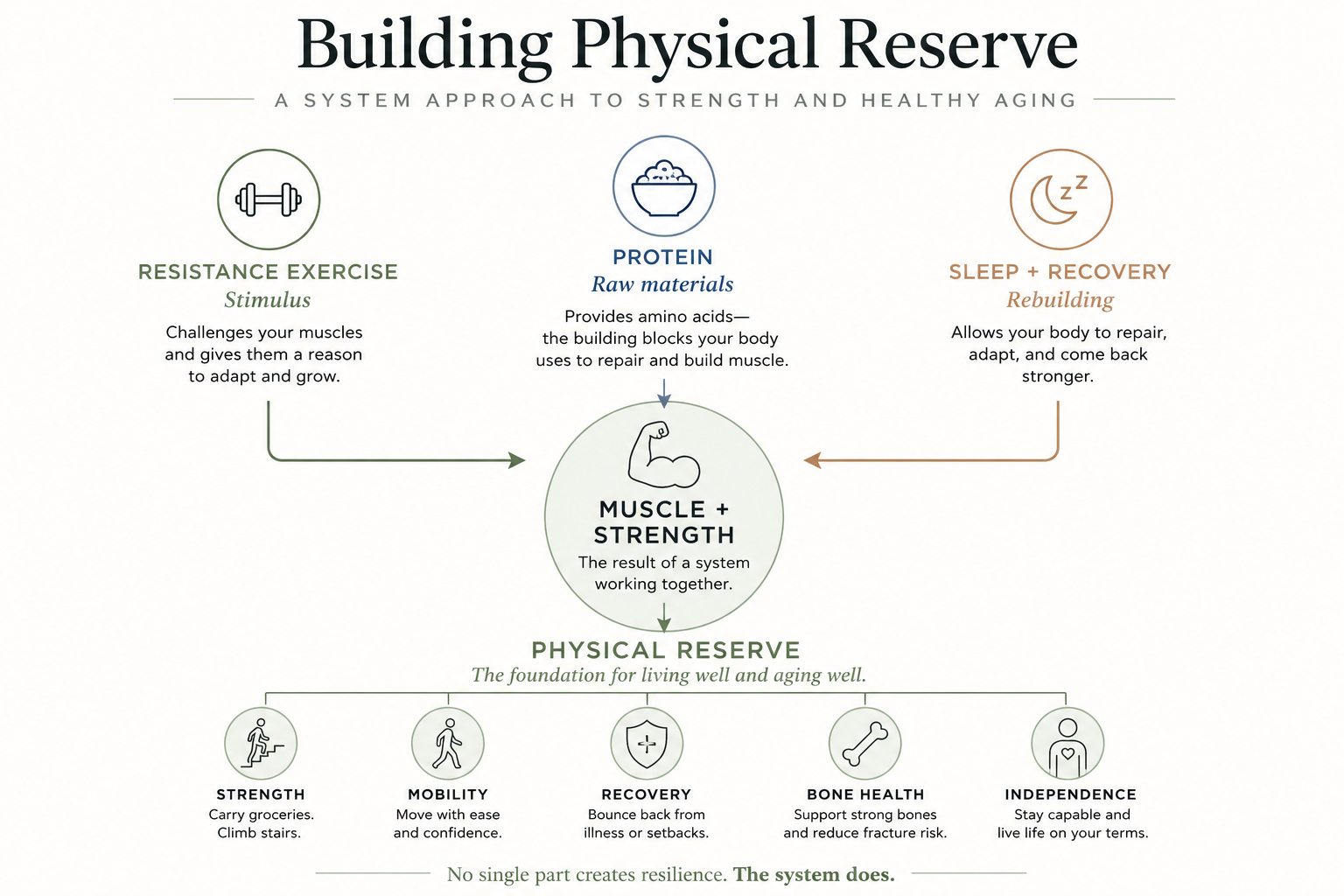
Eating more protein doesn't automatically create stronger muscles.
Muscle needs a reason to adapt.
Resistance exercise → stimulus
Protein → raw materials
Recovery → rebuilding
Together, they create the conditions that help maintain strength and muscle over time.
What Are the Best Sources of Protein?
Protein can come from both animal and plant foods.
Animal proteins generally contain all nine essential amino acids in proportions well suited to human needs, but a varied plant-based diet can also provide adequate protein.
The larger dietary pattern matters more than finding one perfect source.
Do You Need Protein Powder?

Probably not.
Protein powder isn't inherently better than food. It's convenient.
If you're already meeting your protein needs through meals, adding a shake may offer little additional benefit. But if you struggle to consume enough protein throughout the day, a protein powder can make the target much easier to reach.
But the “perfect” nutrition plan doesn't help much if it doesn't fit into everyday life.
A simple protein shake you actually drink every morning may be more useful than an elaborate high-protein breakfast you abandon after a week.
What Should You Realistically Expect?
Increasing protein isn't likely to produce a dramatic transformation by itself.
If your intake was already adequate, adding substantially more may accomplish little. But if your intake is low—particularly when combined with resistance exercise—adequate protein can help maintain or build muscle over time.
Think months and years, not days.
My Current Take
Protein is one of those wellness topics that becomes more interesting when you stop thinking about it as a product.
It's infrastructure.
The goal isn't to drink more protein shakes. It’s to preserve the physical system that allows us to carry groceries, climb stairs, work in the garden, recover from illness, and remain independent as we grow older.
Protein helps. So do strength training, good nutrition, sleep, and recovery.
No single part creates resilience.
The system does.
The Bottom Line
Protein needs don't suddenly change on your 40th birthday. But midlife is a useful time to become more intentional about preserving the muscle and strength we'll want decades from now.
That means consuming adequate protein and pairing good nutrition with regular resistance exercise.
Healthy aging isn't simply about preventing decline.
It's about building the capacity to remain resilient late into life.

NOTE: People with chronic kidney disease or another condition requiring dietary protein management should discuss appropriate intake with a professional rather than adopting a generic high-protein target.