
For years, fish oil supplements and omega-3 fatty acids seemed almost synonymous with good health.
Fish oil supplements were recommended for heart health, brain health, inflammation, joints, skin, and healthy aging. At one point, it felt as though omega-3 supplements were the answer to almost everything.
Then the research became more nuanced.
Some benefits remained well supported. Others became less certain as scientists began asking more specific questions about who benefits, when they benefit, and whether eating fish is different from taking a capsule.
Rather than asking whether omega-3s are "good" or "bad," I think a more useful question is:
Why does one nutrient appear in conversations about so many different parts of the body?
What Are Omega-3s?
Omega-3 fatty acids are essential fats that support heart health, brain function, healthy cell membranes, and many other biological processes throughout the body.
The three you'll hear about most often are:
EPA (eicosapentaenoic acid) – found primarily in fatty fish and fish oil
DHA (docosahexaenoic acid) – also found in fish and especially important in the brain and eyes
ALA (alpha-linolenic acid) – found in foods like flaxseed, chia seeds, and walnuts
While our bodies can convert a small amount of ALA into EPA and DHA, the conversion is relatively inefficient.
Best Food Sources of Omega-3s
Good sources include:
salmon
sardines
trout
mackerel
herring
Plant sources of ALA include:
flaxseed
chia seeds
walnuts
Eating fatty fish once or twice each week remains one of the simplest ways to obtain EPA and DHA through food.
Why Omega-3s Matter
What makes omega-3s interesting isn't that they target one organ.
It's that they become part of the structure of nearly every cell in the body.
Every cell is surrounded by a membrane—a thin outer layer that helps regulate what enters and leaves the cell and allows cells to communicate with one another.
Omega-3 fatty acids become incorporated into those membranes.
Because every organ is built from cells, omega-3s naturally influence many body systems.
That doesn't mean they dramatically improve every condition.
It means they help support the structures that allow many systems to function normally.
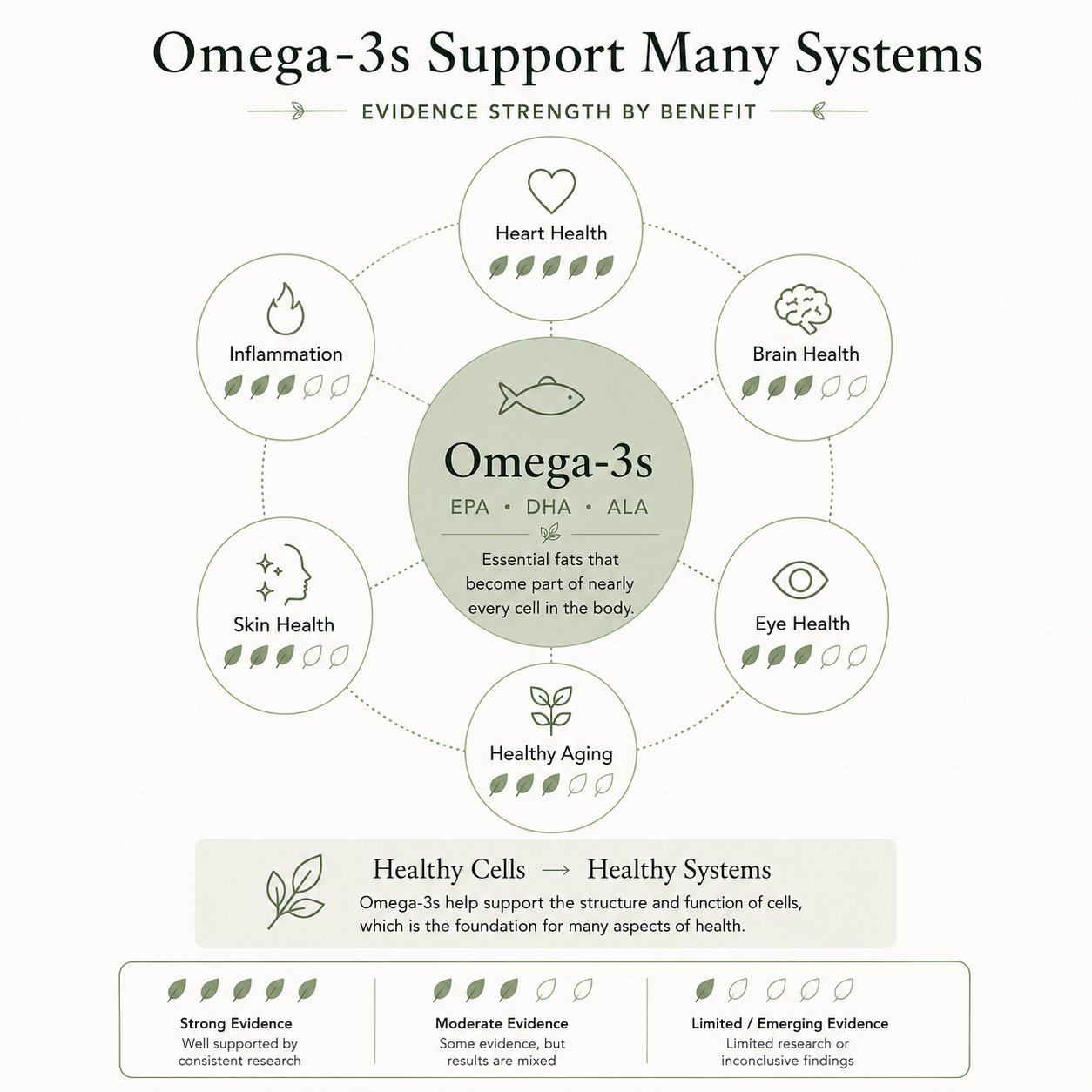
What Does the Evidence Say?
Heart Health
This is where the evidence is strongest.
Eating fatty fish regularly is consistently associated with better cardiovascular health. Prescription-strength omega-3 medications can significantly lower triglyceride levels and are used for specific medical conditions under a physician's guidance.
The benefits of over-the-counter fish oil supplements for preventing heart disease in otherwise healthy people are less consistent.
Inflammation
Omega-3s play a role in regulating inflammatory pathways, and some people with inflammatory conditions may benefit.
However, they're unlikely to produce dramatic improvements in everyday aches and pains.
Brain Health
DHA is an important structural component of the brain.
While maintaining adequate omega-3 intake supports normal brain function, studies of fish oil supplements for improving memory or preventing cognitive decline have produced mixed results.
Skin Health
Healthy cell membranes help maintain the skin barrier and support hydration.
The biological rationale is compelling, but human studies suggest benefits are generally modest rather than dramatic. If you're interested in skincare, you might also enjoy my article on why the skin barrier matters.
Healthy Aging
Omega-3s are involved in many biological systems, which is why they continue to be studied in healthy aging.
So far, the evidence suggests they may contribute to long-term health, but they are unlikely to be a single solution for aging well.
Muscle and metabolic health also depend on many interconnected systems. I explored that idea further in my article on protein after 40. Magnesium provides another example of a nutrient that quietly supports hundreds of biological processes.
Should You Take an Omega-3 Supplement?
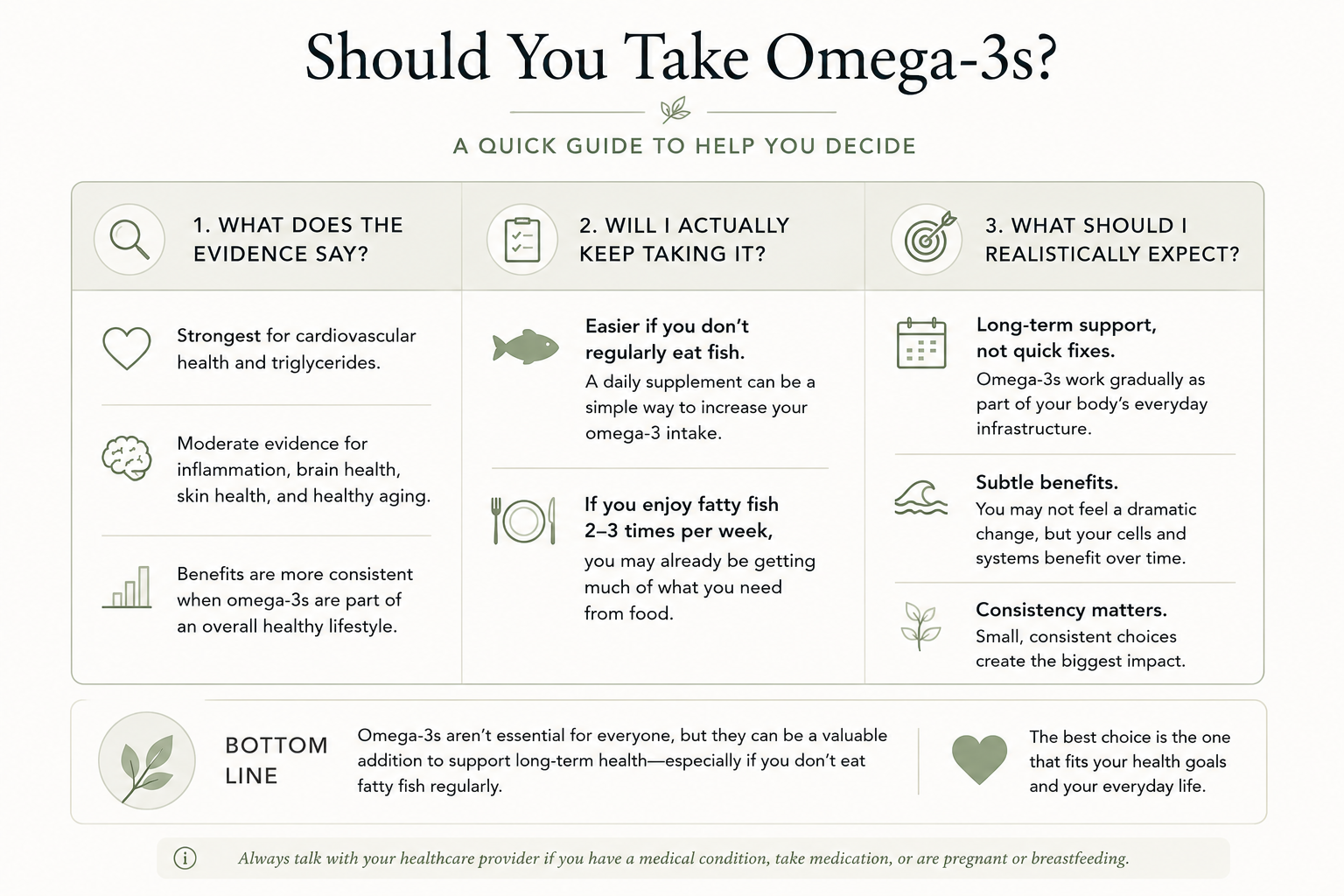
If you regularly eat fatty fish, you may already be getting plenty of EPA and DHA.
If you rarely eat fish, a fish oil supplement may be a practical option.
Fish oil isn't inherently better than food.
It's simply another way of obtaining these essential fats.
For most people, the question isn't whether omega-3s are "good" or "bad." It's whether they're the best way to support your own health goals and dietary pattern.
The Bigger Picture
Fish oil became popular because it seemed to promise benefits for almost every part of the body. The more we learned, the clearer it became that omega-3s aren't remarkable because they target one organ—they're remarkable because they become part of nearly every cell in the body.
One of the most useful questions you can ask about any wellness product is:
Does it support a system that's fundamental to health, or is it simply promising to solve one isolated problem?
The products will continue to change.
The principle won't.