Peptides for Skin: What They Do, What They Don't Do, and Whether They're Worth the Money

If you've spent any time researching anti-aging skincare, you've probably encountered peptide serums.
They're everywhere.
Peptides appear in serums, moisturizers, eye creams, masks, and countless products promising firmer, smoother, younger-looking skin. According to the marketing, peptides can stimulate collagen production, improve elasticity, reduce wrinkles, strengthen the skin barrier, and help skin look healthier over time.
It's an impressive list of claims.
As someone with a background in public health research, I tend to approach those claims with a healthy dose of skepticism. Much of my career has involved evaluating evidence and separating meaningful findings from wishful thinking. The wellness industry provides plenty of opportunities to practice that skill.
So when peptides started appearing in nearly every skincare recommendation, I became curious.
Do peptide serums actually work? What do peptides do for skin? And are they worth adding to an already crowded skincare routine?
What Are Peptides in Skincare?
Peptides are short chains of amino acids—the building blocks of proteins.
In skincare, peptides are often described as messenger molecules. The theory is that they send signals encouraging the skin to repair itself, including the production of collagen and elastin, two proteins that help skin remain firm, resilient, and youthful-looking.
At least in theory, this makes sense.
The challenge is that "peptides" are not a single ingredient. The term refers to a large family of compounds with different structures, concentrations, and delivery systems.
Some peptides have been studied extensively. Others are supported primarily by marketing claims.
That makes peptides harder to evaluate than ingredients like sunscreen, retinoids, or azelaic acid, where the evidence base is much more established.
What Do Peptides Do for Skin?
The primary goal of peptide skincare products is to support:
Skin hydration
Skin barrier function
Elasticity and firmness
Collagen production
Reduction in the appearance of fine lines
The key phrase here is support.
Peptides are not resurfacing agents like retinoids, nor do they provide the UV protection of sunscreen. Instead, they're generally marketed as ingredients that help maintain skin health over time.
Do Peptide Serums Actually Work?
Based on the current evidence, the most balanced answer is:
Probably—but modestly.
Several peptides have shown promise in improving skin hydration, elasticity, and the appearance of fine lines. However, the improvements tend to be gradual and relatively subtle.
Results depend on several factors:
The specific peptide used
The concentration of the ingredient
The overall formulation
Whether the peptide can effectively penetrate the skin
Consistent long-term use
In other words, peptides may contribute to healthier-looking skin, but they're unlikely to produce dramatic transformations on their own.
If you're hoping for facelift-level results from a serum, you're likely to be disappointed.
If you're looking for gradual improvements over months rather than days, peptides may be worth exploring.
My Experience Using Peptide Serums
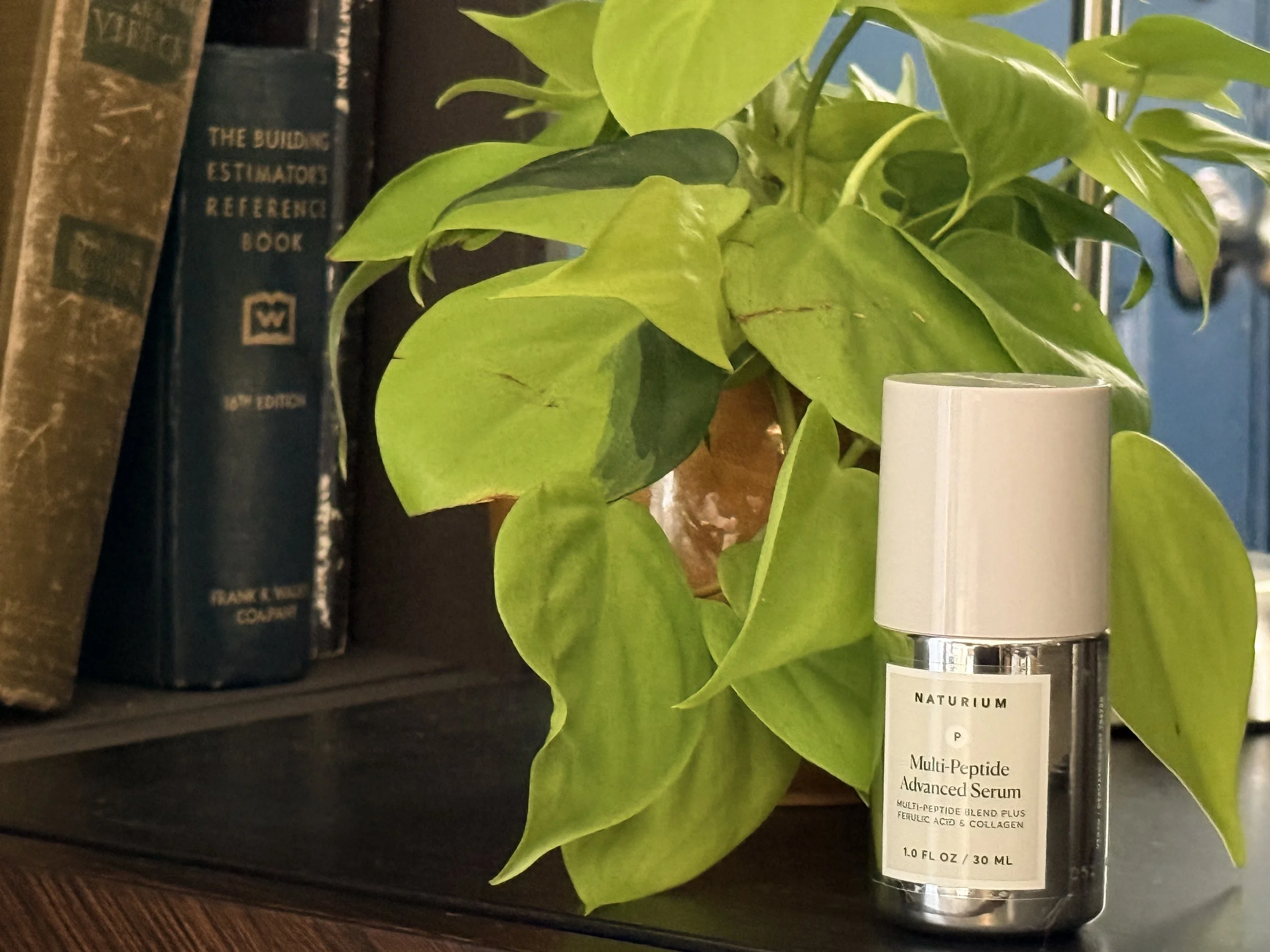
I've used peptide products on and off for years.
Most fell into a category I think of as "pleasant but inconclusive." I enjoyed using them, but I couldn't confidently identify visible changes that I could attribute specifically to the peptides.
One exception was a peptide serum from Goop that I genuinely liked. My skin appeared smoother and healthier while I was using it, although it's impossible to know whether the improvement came from the peptides themselves or from the overall formulation.
More recently, I've been experimenting with Naturium Multi-Peptide Advanced Serum.
At the time of writing, I'm about two weeks in and using it twice per week.
So far, I haven't noticed any visible improvements. I also haven't experienced irritation, redness, or dryness. For someone with somewhat sensitive skin, that's a positive start.
Most ingredients that genuinely improve skin quality work slowly. Consistency matters more than excitement.
For now, the experiment continues.
Who Should Consider Peptides?
Peptides may be a good fit for people who:
Want to support healthy aging without aggressive treatments
Have sensitive skin that doesn't tolerate stronger active ingredients
Prefer gradual improvements over dramatic interventions
Enjoy skincare as a long-term practice rather than a quick fix
In many ways, peptides strike me as a low-risk, potentially helpful addition to a skincare routine.
What Peptides Won't Do
It's equally important to understand what peptides are unlikely to accomplish.
Peptides won't:
Replace sunscreen
Reverse decades of sun damage
Eliminate deep wrinkles overnight
Produce dramatic before-and-after transformations
That's not a criticism of peptides.
Most skincare ingredients don't do those things.
The problem is often not the ingredient itself—it's the expectations created by marketing.
Are Peptides Worth It? My Final Take
At this point, I think peptides occupy an interesting middle ground.
The science is promising but not definitive. The risks appear low. The potential benefits seem real, if modest.
Will peptides become a permanent part of my skincare routine?
I'm not sure yet.
What I appreciate about peptides is that they represent a more realistic approach to skincare. Rather than promising dramatic transformations, they may offer small improvements that accumulate over time.
That's often how meaningful change happens—not through miracles, but through consistency.
For now, I'm approaching peptides the same way I approach many wellness products: with curiosity, cautious optimism, and a willingness to let the results speak for themselves.